Postmodernism is the name for the current time period we occupy. It's the natural result of the explosion of the Industrial Revolution and then Modernism, and then now Postmodernism. So shortly, how after 500 years of capitalism, how people began to relate to each other and to objects has taken a fundamental change.
In Black American consumer culture, this system is high-context. One must have the context for the brand and its associated prestige. Sneakers function as social currency. Luxury brands stop being clothes and turn into communicators β a mere vessel for communicating to others the value of the owner. So now brands must consider what the brand is saying to others, rather than focusing on the product.
I grew up inside this system as a fish lives in water. The only difference is that I'm the fish that left its tiny tank, went to university to study hydrolysis, and now consults fishermen on how to increase their yield.
That combination β native fluency plus analytical architecture β is what I bring to your brand.
Your product enters a market where it immediately becomes a symbol. You don't control what symbol it becomes β the market does. Your job, with my help, is to ensure the symbol it becomes is the one you intended.
Without that intentionality, you are not just launching a product. You are launching a sign into a system that will interpret it however it wants. Sometimes that works. Usually it doesn't. And when it fails, it fails publicly.
"Baudrillard, Debord, and Barthes wrote the operating manual. I'm the one who can read it to you in the language the market speaks."
The Postmodern Negro is the most fluent consumer in America. He reads brands the way other people read books. A chain is not jewelry. A grill is not dental work. A stack of cash held against the ear is not a phone call. Every object is a sentence, and he has been speaking this language his whole life while the market is still sounding out the words.
This is not about money. It is about literacy. He assigns meaning to objects faster than companies can manufacture them, and he drops them the second the meaning runs dry. He took a system of symbols nobody handed him and turned it into a way of moving through the world. Baudrillard wrote about the system of objects in a Paris study. The Postmodern Negro lives it on a Miami corner and never cites the source.
Study his psychology and you can see where American taste is headed before it arrives. He is the test. If your brand earns its place in his world, the rest of the country follows. If it doesn't, you were never really in the market to begin with.




Baudrillard argued that in modern society, objects no longer satisfy needs β they signify social position within a code. Consumption is the systematic manipulation of signs. A sneaker is not footwear. It is a claim about who you are, which community you belong to, and what values you hold. Brands that misread the sign system are not just wrong β they are illegible. And illegible brands get rejected without explanation.
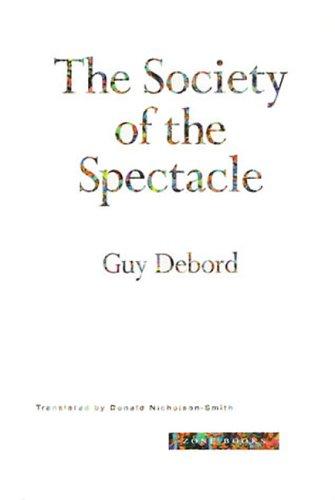
Guy Debord (1967) argued that modern life is mediated by spectacle β a social relation between people mediated by images. In Black American culture, this manifests through the elevated role of visual culture, celebrity, fashion, music video, and digital presentation. The spectacle isn't superficial. It IS the market. Brands that enter through the spectacle but lack symbolic alignment with the underlying values get exposed and rejected β often virally.
Roland Barthes showed how ordinary cultural objects carry mythological meaning β a second layer of signification built on top of the literal. In Black American consumer culture, luxury goods, streetwear, music artists, and even slang operate as myths: they carry ideological weight beyond their surface meaning. Brands that understand only the first order (the product) miss the second order (what it means to be seen with it).
Essays applying this theory directly to market strategy: